
11/6/09


Obama Says Administration Pursuing More Jobs
President Barack Obama said his administration will continue to pursue measures that will stimulate job growth after the Labor Department reported the nation’s unemployment rate jumped to 10.2 percent last month.
The president made his remarks after signing into law a measure extending an $8,000 tax credit for first-time homebuyers and benefits for unemployed workers. It also provides tax refunds to money-losing companies. His spokesman said the administration expects the jobless rate will continue to rise before coming down again.
“My economic team is looking at ideas such as additional investments in our aging roads and bridges, incentives to encourage families and businesses to make buildings more energy efficient,” additional tax cuts, and more steps to ease the flow of credit to small business and promote exports, he said.
Employers have shed 7.3 million jobs since the recession began in December 2007, 3.5 million of those since Obama took office in January. Obama called the October jobs report “a sobering number that underscores the challenge that lies ahead.”
White House press secretary Robert Gibbs said at a later briefing that the administration expects the unemployment rate will get “a little worse before it gets better.”
Political Peril
The jobless rate carries political peril for Obama if the figure remains high in the months preceding the mid-term congressional elections a year from now.
The economy was listed as the most important issue facing the country by 47 percent of the American public in a CNN poll conducted Oct. 30 to Nov. 1, surpassing health care and the wars in Iraq and Afghanistan.
“Although it will take time and will take patience, I’m confident that our economy will recover,” Obama said.
The legislation Obama signed will funnel an estimated $45 billion into the economy this year. It is the first major expansion of provisions in February’s $787 billion economic stimulus package. The bill would extend until April 30 the tax credit for first-time homebuyers that would otherwise expire at the end of this month.
The jobless would get as many as 20 additional weeks of unemployment assistance. Companies would be given expanded ability to apply losses to previous years’ income, allowing them to qualify this year for $33 billion in tax refunds, according to Congress’s Joint Committee on Taxation.
The 10.2 percent jobless rate in October is a 26-year high, up from 9.8 percent in September. The Labor Department said employers cut 190,000 jobs last month, more than the 175,000 expected by economists in a Bloomberg News survey. The jobless rate exceeded 10 percent for the first time since 1983.
- Via Bloomberg
The president made his remarks after signing into law a measure extending an $8,000 tax credit for first-time homebuyers and benefits for unemployed workers. It also provides tax refunds to money-losing companies. His spokesman said the administration expects the jobless rate will continue to rise before coming down again.
“My economic team is looking at ideas such as additional investments in our aging roads and bridges, incentives to encourage families and businesses to make buildings more energy efficient,” additional tax cuts, and more steps to ease the flow of credit to small business and promote exports, he said.
Employers have shed 7.3 million jobs since the recession began in December 2007, 3.5 million of those since Obama took office in January. Obama called the October jobs report “a sobering number that underscores the challenge that lies ahead.”
White House press secretary Robert Gibbs said at a later briefing that the administration expects the unemployment rate will get “a little worse before it gets better.”
Political Peril
The jobless rate carries political peril for Obama if the figure remains high in the months preceding the mid-term congressional elections a year from now.
The economy was listed as the most important issue facing the country by 47 percent of the American public in a CNN poll conducted Oct. 30 to Nov. 1, surpassing health care and the wars in Iraq and Afghanistan.
“Although it will take time and will take patience, I’m confident that our economy will recover,” Obama said.
The legislation Obama signed will funnel an estimated $45 billion into the economy this year. It is the first major expansion of provisions in February’s $787 billion economic stimulus package. The bill would extend until April 30 the tax credit for first-time homebuyers that would otherwise expire at the end of this month.
The jobless would get as many as 20 additional weeks of unemployment assistance. Companies would be given expanded ability to apply losses to previous years’ income, allowing them to qualify this year for $33 billion in tax refunds, according to Congress’s Joint Committee on Taxation.
The 10.2 percent jobless rate in October is a 26-year high, up from 9.8 percent in September. The Labor Department said employers cut 190,000 jobs last month, more than the 175,000 expected by economists in a Bloomberg News survey. The jobless rate exceeded 10 percent for the first time since 1983.
- Via Bloomberg
U.S. Economy: Unemployment Jumps to 10.2%, Payrolls Decline
The unemployment rate in the U.S. jumped to 10.2 percent in October, the highest level since 1983, casting a pall over the prospects for a sustained recovery and risking further erosion of President Barack Obama’s popularity.

Payrolls fell by 190,000 last month, more than forecast by economists, a Labor Department report showed today in Washington. The jobless rate rose from 9.8 percent in September. Factory payrolls dropped by the most in four months, and the average workweek held at a record low.
Treasury two-year notes rose on bets the Federal Reserve is more likely to maintain its pledge to keep interest rates near zero. The figures prompted Obama, who signed a bill today extending jobless benefits, to promise fresh measures to help put some of the 15.7 million unemployed Americans back to work.
“We will certainly have very bad payroll numbers in November and December,” said Harm Bandholz, an economist at UniCredit Global Research in New York, whose forecast for a 10.1 percent unemployment rate matched the highest among economists surveyed by Bloomberg. “We don’t foresee businesses going on a hiring spree anytime soon.”
Two-year note yields fell three basis points, or 0.03 percentage point, to 0.85 percent at 1:16 p.m. in New York. The yield touched 0.83 percent, the lowest since Oct. 2. The Standard & Poor’s 500 Stock Index was little changed after falling as much as 0.7 percent.
Payrolls were forecast to drop 175,000 after an initially reported 263,000 decline for September, according to the median estimate of 84 economists surveyed by Bloomberg News. The jobless rate was projected to rise to 9.9 percent.
Homebuyer Tax Credit
Obama signed into law a measure extending a tax credit of up to $8,000 for homebuyers and benefits for unemployed workers, and he promised to pursue further measures to create jobs.
“My economic team is looking at ideas such as additional investments in our aging roads and bridges, incentives to encourage families and business to make buildings more energy efficient,” additional tax cuts, and more steps to ease the flow of credit to small business and promote exports, he said today at the White House.
For congressional Democrats facing challengers in midterm elections next year, the continuing erosion in the job market puts them at political risk. Voters on Nov. 3 overwhelmingly cited unease with the economy and worries about jobs as they ousted the Democratic governor of New Jersey and installed a Republican governor in Virginia after eight years of Democratic rule there. Obama carried both states in 2008.
Jobs Lost
The U.S. economy has lost 7.3 million jobs since the recession began in December 2007, when the unemployment rate stood at 4.9 percent. Since Obama took office in January, the economy has lost 3.49 million jobs.
The administration said last week that the $787 billion stimulus package plan signed into law in February was directly responsible for saving or creating about 640,000 jobs.
The so-called underemployment rate -- which includes part- time workers who’d prefer a full-time position and people who want work but have given up looking -- reached a record 17.5 percent from 17 percent in September, today’s report showed.
“We’ve got lots of people just giving up and leaving the labor force,” said Julia Coronado, a former Fed economist who now works at BNP Paribas in New York. “Consumer incomes are under pressure, and that raises questions about the sustainability of the improvement we’ve seen in consumer spending.”
Average Work Week
The average work week held at a record low of 33 hours in October, while average weekly earnings rose to $617.76 from $616.11 a month earlier. Workers’ average hourly earnings were 2.4 percent higher than October 2008, the smallest gain since 2004.
Some companies are cutting payrolls amid concern spending will cool as government-assistance programs wane. The New Brunswick, New Jersey-based Johnson & Johnson, the world’s largest health-products company, said Nov. 3 it will shrink its workforce by as much as 7,000 workers.
Factory payrolls dropped 61,000 after decreasing 45,000 in the prior month, today’s report showed. The median forecast by economists called for a drop of 42,000. The decline included a gain of 4,600 jobs in auto manufacturing and parts industries.
Auto Sales
Sales of cars and light trucks rebounded last month after plunging in the wake of the government’s so-called cash-for- clunkers incentive plan. Vehicles sold at a 10.5 million annual pace in October, up from a 9.2 million rate in September.
Inventories at U.S. wholesalers dropped in September for a 13th consecutive month, a separate report today from the Commerce Department showed, clearing the way for a pickup in orders as sales improve.
Today’s report contained some bright spots. Revisions added 91,000 to payroll figures previously reported for September and August, and the number of temporary workers rose by 34,000, the third consecutive gain.
Payrolls at temporary-help agencies often turn up before total employment because companies are not certain increases in demand will be sustainable enough to warrant the expense of taking on permanent staff.
Builders cut payrolls by 62,000 after a loss of 68,000 in September. Financial firms cut payrolls by 8,000, after 9,000 reductions the prior month.
Banks, Restaurants
Service industries, which include banks, insurance companies, restaurants and retailers, subtracted 61,000 workers after cuts of 105,000 the prior month. Retail payrolls decreased by 39,800 after a decline of 44,200.
“The rise in the unemployment rate is very ugly,” Ethan Harris, head of North America economic research at BofA Merrill Lynch Global Research, said in an interview with Bloomberg Television in New York. “This is a big backward step to get this high of an unemployment number this early in the recovery.”
The U.S. economy expanded last quarter for the first time in a year, growing at a 3.5 percent pace as government incentives spurred consumers to spend more on homes and automobiles.
Some companies are gaining confidence. Deere & Co., the world’s largest maker of agricultural equipment, said last week it’s recalling 452 workers, the majority of manufacturing employees dismissed earlier this year at a factory in Iowa.
Fed officials met in Washington this week and signaled that a return to economic growth alone won’t result in higher interest rates. Economist Joseph LaVorgna of Deutsche Bank Securities Inc. in New York said in a note to clients that the jobless rate is “the dominant variable driving changes in the fed funds” rate, and the central bank “has never raised rates with unemployment rising.”
- Via Bloomberg
Payrolls fell by 190,000 last month, more than forecast by economists, a Labor Department report showed today in Washington. The jobless rate rose from 9.8 percent in September. Factory payrolls dropped by the most in four months, and the average workweek held at a record low.
Treasury two-year notes rose on bets the Federal Reserve is more likely to maintain its pledge to keep interest rates near zero. The figures prompted Obama, who signed a bill today extending jobless benefits, to promise fresh measures to help put some of the 15.7 million unemployed Americans back to work.
“We will certainly have very bad payroll numbers in November and December,” said Harm Bandholz, an economist at UniCredit Global Research in New York, whose forecast for a 10.1 percent unemployment rate matched the highest among economists surveyed by Bloomberg. “We don’t foresee businesses going on a hiring spree anytime soon.”
Two-year note yields fell three basis points, or 0.03 percentage point, to 0.85 percent at 1:16 p.m. in New York. The yield touched 0.83 percent, the lowest since Oct. 2. The Standard & Poor’s 500 Stock Index was little changed after falling as much as 0.7 percent.
Payrolls were forecast to drop 175,000 after an initially reported 263,000 decline for September, according to the median estimate of 84 economists surveyed by Bloomberg News. The jobless rate was projected to rise to 9.9 percent.
Homebuyer Tax Credit
Obama signed into law a measure extending a tax credit of up to $8,000 for homebuyers and benefits for unemployed workers, and he promised to pursue further measures to create jobs.
“My economic team is looking at ideas such as additional investments in our aging roads and bridges, incentives to encourage families and business to make buildings more energy efficient,” additional tax cuts, and more steps to ease the flow of credit to small business and promote exports, he said today at the White House.
For congressional Democrats facing challengers in midterm elections next year, the continuing erosion in the job market puts them at political risk. Voters on Nov. 3 overwhelmingly cited unease with the economy and worries about jobs as they ousted the Democratic governor of New Jersey and installed a Republican governor in Virginia after eight years of Democratic rule there. Obama carried both states in 2008.
Jobs Lost
The U.S. economy has lost 7.3 million jobs since the recession began in December 2007, when the unemployment rate stood at 4.9 percent. Since Obama took office in January, the economy has lost 3.49 million jobs.
The administration said last week that the $787 billion stimulus package plan signed into law in February was directly responsible for saving or creating about 640,000 jobs.
The so-called underemployment rate -- which includes part- time workers who’d prefer a full-time position and people who want work but have given up looking -- reached a record 17.5 percent from 17 percent in September, today’s report showed.
“We’ve got lots of people just giving up and leaving the labor force,” said Julia Coronado, a former Fed economist who now works at BNP Paribas in New York. “Consumer incomes are under pressure, and that raises questions about the sustainability of the improvement we’ve seen in consumer spending.”
Average Work Week
The average work week held at a record low of 33 hours in October, while average weekly earnings rose to $617.76 from $616.11 a month earlier. Workers’ average hourly earnings were 2.4 percent higher than October 2008, the smallest gain since 2004.
Some companies are cutting payrolls amid concern spending will cool as government-assistance programs wane. The New Brunswick, New Jersey-based Johnson & Johnson, the world’s largest health-products company, said Nov. 3 it will shrink its workforce by as much as 7,000 workers.
Factory payrolls dropped 61,000 after decreasing 45,000 in the prior month, today’s report showed. The median forecast by economists called for a drop of 42,000. The decline included a gain of 4,600 jobs in auto manufacturing and parts industries.
Auto Sales
Sales of cars and light trucks rebounded last month after plunging in the wake of the government’s so-called cash-for- clunkers incentive plan. Vehicles sold at a 10.5 million annual pace in October, up from a 9.2 million rate in September.
Inventories at U.S. wholesalers dropped in September for a 13th consecutive month, a separate report today from the Commerce Department showed, clearing the way for a pickup in orders as sales improve.
Today’s report contained some bright spots. Revisions added 91,000 to payroll figures previously reported for September and August, and the number of temporary workers rose by 34,000, the third consecutive gain.
Payrolls at temporary-help agencies often turn up before total employment because companies are not certain increases in demand will be sustainable enough to warrant the expense of taking on permanent staff.
Builders cut payrolls by 62,000 after a loss of 68,000 in September. Financial firms cut payrolls by 8,000, after 9,000 reductions the prior month.
Banks, Restaurants
Service industries, which include banks, insurance companies, restaurants and retailers, subtracted 61,000 workers after cuts of 105,000 the prior month. Retail payrolls decreased by 39,800 after a decline of 44,200.
“The rise in the unemployment rate is very ugly,” Ethan Harris, head of North America economic research at BofA Merrill Lynch Global Research, said in an interview with Bloomberg Television in New York. “This is a big backward step to get this high of an unemployment number this early in the recovery.”
The U.S. economy expanded last quarter for the first time in a year, growing at a 3.5 percent pace as government incentives spurred consumers to spend more on homes and automobiles.
Some companies are gaining confidence. Deere & Co., the world’s largest maker of agricultural equipment, said last week it’s recalling 452 workers, the majority of manufacturing employees dismissed earlier this year at a factory in Iowa.
Fed officials met in Washington this week and signaled that a return to economic growth alone won’t result in higher interest rates. Economist Joseph LaVorgna of Deutsche Bank Securities Inc. in New York said in a note to clients that the jobless rate is “the dominant variable driving changes in the fed funds” rate, and the central bank “has never raised rates with unemployment rising.”
- Via Bloomberg
11/2/09
Sheila Bair: All Bark, No Bite
Sheila is apparently upset at the banks "pushing back" against reform:
Alternatively, just read a few Tickers.
- Via Market Ticker
Sheila Bair, chairman of the Federal Deposit Insurance Corp, said on Monday that some in the financial services sector are trying to argue that regulatory reform would stifle innovation and impede economic growth.
"That makes me angry," Bair said in a text of remarks prepared for a lecture at Kansas State University.
It does? You're not showing it.
How hard is this Sheila? You have the authority, along with the OTS and OCC, to walk into any bank in the United States with your examiners, look at every asset they hold, compare it against your standards of a "reasonable" mark and take action if you find that the bank could not be liquidated "at or above par."
You not only can do this but Prompt Corrective Action, US Code Title 12, Chap 16, Section 1831o mandates that you do, as that law is liberally peppered with "SHALL"s and has precious few "MAY"s.
Sheila is being gamed because the FDIC has shown over the last two years that whenever the banking industry say "Bark" the response from Sheila is "YIP!" Indeed, when I looked up "lapdog" in an online dictionary I got the following back:
lap*dog
Function: noun
Date: 1645
a small dog that may be held in the lap
a servile dependent or follower
Sheila Bair
Oops, did I make that last one up? Well....
There is already plenty of law on the books to cover what's been going on here, especially when it comes to banking regulation.
The examiners can have their mandate set by Sheila, along with the OTS and OCC. Their job, after all, is to determine what the odds are of loss to the deposit fund and whether a bank is safe and sound (for depositors), not whether the numbers will look good for Wall Street's quarterly parade.
Yes, I'm sure the banks would grouse if the examiners were to show up and demand that banks hold capital against the underwater portion of Home Equity loans, subprime CDOs and similar garbage. They'd also squeal if the examiners decided that any loan that was 60+ had to be reserved against at recovery value.
So what? The response ought from them to be "Talk to the hand."
Those banks that don't like these rules don't have to take FDIC insurance! They can run without it if they're so "safe" - let's see how many depositors they retain without it.
If Sheila doesn't like being the hard-nosed enforcer of capital adequacy and marking assets at recovery value as soon as loans fail to be paid on time then she should resign and cede the office to someone who has no problem getting on the phone - or showing up in person - and raising hell.
I'll volunteer, and suggest that anyone wondering if I have the "sack" for the job should find Mory Ejebat (formerly of Ascend) and mention my name.
Bring a tape recorder and post the result on YouTube.
- Via Market Ticker
U.S. FDIC's Bair angered by banks fighting reforms
A top U.S. bank regulator struck out against the portions of the financial industry that are fighting reforms, saying they are using fear tactics.
Sheila Bair, chairman of the Federal Deposit Insurance Corp, said on Monday that some in the financial services sector are trying to argue that regulatory reform would stifle innovation and impede economic growth.
"That makes me angry," Bair said in a text of remarks prepared for a lecture at Kansas State University.
Bair said the extreme market interventions that have occurred during the recent financial crisis have been difficult for her as a life-long Republican and market advocate.
But she said they were necessary and that government needs even more tools to discourage financial firms from getting so large that taxpayers are forced to provide assistance if the firms become unstable.
"The government has been going into places where we don't want to be," Bair said, but she added: "We simply cannot afford to maintain the status quo."
Lawmakers are hammering out a major piece of legislation that would tackle fears that a few elite financial giants are "too big to fail."
The legislation would grant vast powers to a new systemic risk regulatory council, the Federal Reserve and the FDIC to monitor and address risks to economic stability posed by shaky financial holding companies.
It would also create a new consumer agency to police financial products -- a change that is desperately needed to protect the public, Bair said.
"Given the importance of the consumer to our overall economy, it is amazing to me that we haven't done a better job in protecting them," she said.
- Via Reuters
Sheila Bair, chairman of the Federal Deposit Insurance Corp, said on Monday that some in the financial services sector are trying to argue that regulatory reform would stifle innovation and impede economic growth.
"That makes me angry," Bair said in a text of remarks prepared for a lecture at Kansas State University.
Bair said the extreme market interventions that have occurred during the recent financial crisis have been difficult for her as a life-long Republican and market advocate.
But she said they were necessary and that government needs even more tools to discourage financial firms from getting so large that taxpayers are forced to provide assistance if the firms become unstable.
"The government has been going into places where we don't want to be," Bair said, but she added: "We simply cannot afford to maintain the status quo."
Lawmakers are hammering out a major piece of legislation that would tackle fears that a few elite financial giants are "too big to fail."
The legislation would grant vast powers to a new systemic risk regulatory council, the Federal Reserve and the FDIC to monitor and address risks to economic stability posed by shaky financial holding companies.
It would also create a new consumer agency to police financial products -- a change that is desperately needed to protect the public, Bair said.
"Given the importance of the consumer to our overall economy, it is amazing to me that we haven't done a better job in protecting them," she said.
- Via Reuters
Food Stamps Will Feed Half Of US Kids, Study Says
Nearly half of all U.S. children and 90 percent of black youngsters will be on food stamps at some point during childhood, and fallout from the current recession could push those numbers even higher, researchers say.

The estimate comes from an analysis of 30 years of national data, and it bolsters other recent evidence on the pervasiveness of youngsters at economic risk. It suggests that almost everyone knows a family who has received food stamps, or will in the future, said lead author Mark Rank, a sociologist at Washington University in St. Louis.
"Your neighbor may be using some of these programs but it's not the kind of thing people want to talk about," Rank said.
The analysis was released Monday in the November issue of Archives of Pediatrics and Adolescent Medicine. The authors say it's a medical issue pediatricians need to be aware of because children on food stamps are at risk for malnutrition and other ills linked with poverty.
"This is a real danger sign that we as a society need to do a lot more to protect children," Rank said.
Food stamps are a Department of Agriculture program for low-income individuals and families, covering most foods although not prepared hot foods or alcohol. For a family of four to be eligible, their annual take-home pay can't exceed about $22,000.
According to a USDA report released last month, 28.4 million Americans received food stamps in an average month in 2008, and about half were younger than age 18. The average monthly benefit per household totaled $222.
Rank and Cornell University sociologist Thomas Hirschl studied data from a nationally representative survey of 4,800 American households interviewed annually from 1968 through 1997 by the University of Michigan. About 18,000 adults and children were involved.
Overall, about 49 percent of all children were on food stamps at some point by the age of 20, the analysis found. That includes 90 percent of black children and 37 percent of whites. The analysis didn't include other ethnic groups.
The time span included typical economic ups and downs, including the early 1980s recession. That means similar portions of children now and in the future will live in families receiving food stamps, although ongoing economic turmoil may increase the numbers, Rank said.
An editorial in the medical journal agreed.
"The current recession is likely to generate for children in the United States the greatest level of material deprivation that we will see in our professional lifetimes," Stanford pediatrician Dr. Paul Wise wrote.
Wise said the Archives study estimate is believable.
"I find it terribly sad, but not surprising," Wise said.
James Weill, president of Food Research and Action Center, a Washington-based advocacy group, said the analysis underscores that "there are just very large numbers of people who rely on this program for a month, six months, a year."
"What I hope comes out of this study is an understanding that food stamp beneficiaries aren't them – they're us," Weill said.
The analysis is in line with other recent research suggesting that more than 40 percent of U.S. children will live in poverty or near-poverty by age 17; and that half will live at some point in a single-parent family. Also, other researchers have estimated that slightly more than half of adults will use food stamps at some point by age 65.
- Via Huffington Post
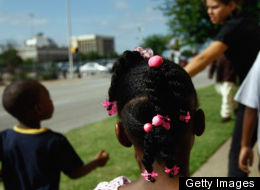
The estimate comes from an analysis of 30 years of national data, and it bolsters other recent evidence on the pervasiveness of youngsters at economic risk. It suggests that almost everyone knows a family who has received food stamps, or will in the future, said lead author Mark Rank, a sociologist at Washington University in St. Louis.
"Your neighbor may be using some of these programs but it's not the kind of thing people want to talk about," Rank said.
The analysis was released Monday in the November issue of Archives of Pediatrics and Adolescent Medicine. The authors say it's a medical issue pediatricians need to be aware of because children on food stamps are at risk for malnutrition and other ills linked with poverty.
"This is a real danger sign that we as a society need to do a lot more to protect children," Rank said.
Food stamps are a Department of Agriculture program for low-income individuals and families, covering most foods although not prepared hot foods or alcohol. For a family of four to be eligible, their annual take-home pay can't exceed about $22,000.
According to a USDA report released last month, 28.4 million Americans received food stamps in an average month in 2008, and about half were younger than age 18. The average monthly benefit per household totaled $222.
Rank and Cornell University sociologist Thomas Hirschl studied data from a nationally representative survey of 4,800 American households interviewed annually from 1968 through 1997 by the University of Michigan. About 18,000 adults and children were involved.
Overall, about 49 percent of all children were on food stamps at some point by the age of 20, the analysis found. That includes 90 percent of black children and 37 percent of whites. The analysis didn't include other ethnic groups.
The time span included typical economic ups and downs, including the early 1980s recession. That means similar portions of children now and in the future will live in families receiving food stamps, although ongoing economic turmoil may increase the numbers, Rank said.
An editorial in the medical journal agreed.
"The current recession is likely to generate for children in the United States the greatest level of material deprivation that we will see in our professional lifetimes," Stanford pediatrician Dr. Paul Wise wrote.
Wise said the Archives study estimate is believable.
"I find it terribly sad, but not surprising," Wise said.
James Weill, president of Food Research and Action Center, a Washington-based advocacy group, said the analysis underscores that "there are just very large numbers of people who rely on this program for a month, six months, a year."
"What I hope comes out of this study is an understanding that food stamp beneficiaries aren't them – they're us," Weill said.
The analysis is in line with other recent research suggesting that more than 40 percent of U.S. children will live in poverty or near-poverty by age 17; and that half will live at some point in a single-parent family. Also, other researchers have estimated that slightly more than half of adults will use food stamps at some point by age 65.
- Via Huffington Post
Subscribe to:
Posts (Atom)


![[Most Recent USD from www.kitco.com]](https://lh3.googleusercontent.com/blogger_img_proxy/AEn0k_vvgYBJd1ewdMdLPXtmDi_Fwf1AjH8_lxi3gudlAfhVNJX42D_04-z1GFSnarUu6q2qoT6wmp7PnUwQRpxUeNaCg0LLD0cfXvd2enmIv1GkdoIUdgr-QJWH=s0-d)


 Posts
Posts

